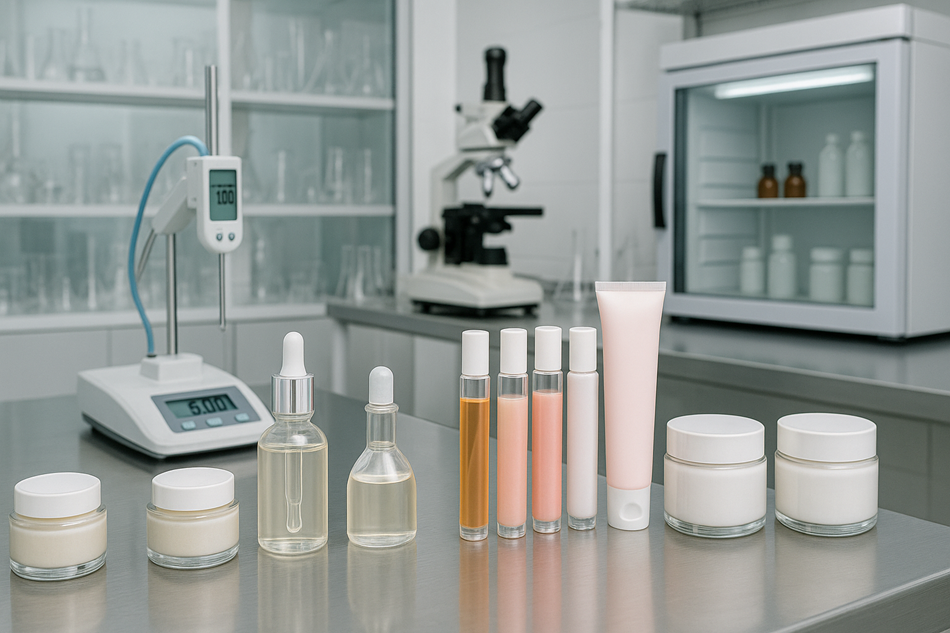

Cosmetics are not judged only by their performance on day one. A face cream that feels silky at launch but separates into clumps after a few weeks won’t just disappoint—it could harm the skin and undermine trust in the brand.
Consumers expect consistency from the first pump to the last, and regulators demand evidence that a product remains safe and effective for its intended shelf life.
This is where stability testing comes in. It is the scientific process that determines how a cosmetic behaves under real-world conditions and stress factors like heat, humidity, light, and time. For manufacturers, stability testing is the guardrail that ensures a product lives up to its claims while protecting both consumers and brand reputation.
What Is Stability Testing in Cosmetics?
Stability testing is a systematic evaluation of how a cosmetic product maintains its intended physical, chemical, and microbiological qualities over time. In simpler terms, it answers a crucial question: will this product remain safe and effective until the last day printed on the label?
The Science Behind It
Cosmetic formulations are complex mixtures of water, oils, surfactants, actives, and preservatives. Each ingredient can interact with others in unpredictable ways. Exposure to light may trigger oxidation. Heat and humidity can break down emulsions. Even packaging materials can accelerate degradation. Stability testing identifies these vulnerabilities before the consumer ever opens the product.
Why Stability Testing Matters for Cosmetic Products
Ensuring Safety for Consumers
Cosmetics that lose stability may harbor microbial growth or degrade into harmful byproducts. A simple change in pH can irritate the skin. Preservatives that fail under stress can leave a product vulnerable to contamination. Testing verifies that the product remains safe throughout its shelf life.
Meeting Regulatory Requirements
In the United States, the FDA expects manufacturers to substantiate product safety, while the European Union, ASEAN, and ISO guidelines require documented stability studies. Failing to meet these standards can result in regulatory action, fines, or removal from the market.
Protecting Brand Reputation
Consumers are unforgiving when it comes to quality lapses. A single recall due to unstable products can erase years of trust-building. Stability testing helps prevent these crises, protecting not only the consumer but the long-term viability of the brand.
Key Parameters Evaluated in Cosmetic Stability Testing
Physical Stability
Physical testing evaluates changes in color, odor, viscosity, and texture. A lotion that turns watery or a lipstick that sweats on the shelf signals instability. Packaging compatibility is also assessed, ensuring the product does not leak, corrode, or break down inside its container.
Chemical Stability
Active ingredients—like antioxidants, UV filters, or retinoids—can degrade over time. Testing monitors the concentration of these compounds, confirming the product performs as promised until the end of its shelf life.
Microbiological Stability
Cosmetics, particularly water-based formulations, provide a hospitable environment for microbes. Stability testing includes preservative efficacy testing, where the product is deliberately inoculated with bacteria and fungi to ensure the preservative system controls contamination.
Packaging Interaction
Packaging is not inert. Plastics may leach chemicals, glass may react with highly acidic formulations, and metal components can rust. Testing examines whether the packaging compromises the product or alters its stability.
Types of Stability Testing for Cosmetics
Real-Time Stability Testing
This gold-standard approach stores products under normal conditions to measure actual shelf life. While it takes longer, it provides the most reliable evidence for determining expiration dates.
Accelerated Stability Testing
Accelerated methods expose products to elevated stress—high heat, humidity, or UV light—to predict long-term behavior in a shorter timeframe. These tests are invaluable for speeding up development cycles while still generating meaningful data.
Freeze-Thaw and Stress Testing
Formulations are cycled between freezing and thawing conditions to simulate harsh shipping and storage scenarios. A cream that separates after three freeze-thaw cycles may need reformulation before global distribution.
The Role of Environmental Factors in Stability
Temperature and Humidity
Climate-controlled chambers simulate different geographic environments, from humid tropics to cold, dry regions. Testing ensures a product remains stable whether it’s sitting in a bathroom in Manila or a shop in Montreal.
Light Exposure
UV testing assesses how products respond to direct sunlight or fluorescent lighting. Oxidation, fading, or rancidity are common risks. Sunscreens, in particular, must prove resilience under light exposure.
Transportation and Shelf Conditions
Products endure unpredictable conditions during transport—hot delivery trucks, long sea voyages, or poorly ventilated storage. Stability testing replicates these conditions to confirm that packaging and formulation can withstand real-world handling.
How Stability Testing Shapes Cosmetic Product Development
Optimizing Formulation
Data from stability testing provides direct feedback for chemists. If preservatives lose effectiveness at high humidity, the system can be adjusted. If oils oxidize, antioxidants can be added. Stability results become a roadmap for improving the formulation.
Guiding Packaging Decisions
A product might perform perfectly in glass but degrade in polyethylene tubes. Stability testing identifies the best packaging options, ensuring compatibility and longevity.
Reducing Product Launch Risks
The cost of conducting stability testing is minimal compared to the losses from a failed launch. Reliable data allows manufacturers to move forward with confidence, reducing risk and protecting investments.
Qalitex: Supporting Cosmetic Brands with Advanced Stability Testing
At Qalitex, we specialize in designing stability studies that align with global standards, from FDA expectations to ISO guidelines. Our laboratories are equipped with controlled chambers that simulate a wide range of environmental conditions, allowing us to conduct both accelerated and real-time stability tests.
Tailored Testing Programs
We understand that no two cosmetic products are the same. A natural botanical cream requires different testing parameters than a long-wear foundation. Our team develops protocols that reflect the unique needs of each formulation, ensuring accurate and actionable results.
Beyond Stability: Comprehensive Cosmetic Testing
Stability is only one piece of the safety and quality puzzle. Qalitex also provides microbiological testing, preservative efficacy testing, and claim validation studies. This integrated approach supports brands from concept to compliance, ensuring that products are not only stable but also safe, effective, and ready for global markets.
Challenges and Best Practices in Cosmetic Stability Testing
Small brands often face budget limitations, while large corporations battle tight launch timelines. Complex formulations—such as natural products with fewer preservatives—add another layer of difficulty. Without expert guidance, these challenges can compromise product integrity.
Best Practices for Reliable Results
The most successful stability programs begin early in product development. Selecting appropriate test conditions, monitoring critical parameters, and working with accredited laboratories are non-negotiable. Brands that integrate stability testing into their development process consistently deliver safer, higher-quality products to market.
Final Thoughts
Stability testing is not simply a regulatory formality. It is the safeguard that ensures cosmetic products meet their promises of safety, effectiveness, and quality. For brands, it means protecting reputation, preventing costly recalls, and earning consumer trust. For consumers, it means confidence in every drop, swipe, or application.
Cosmetic products live and die by their stability. Brands that treat stability testing as a cornerstone of product development—not a last-minute requirement—position themselves for lasting success in an industry where trust is everything.