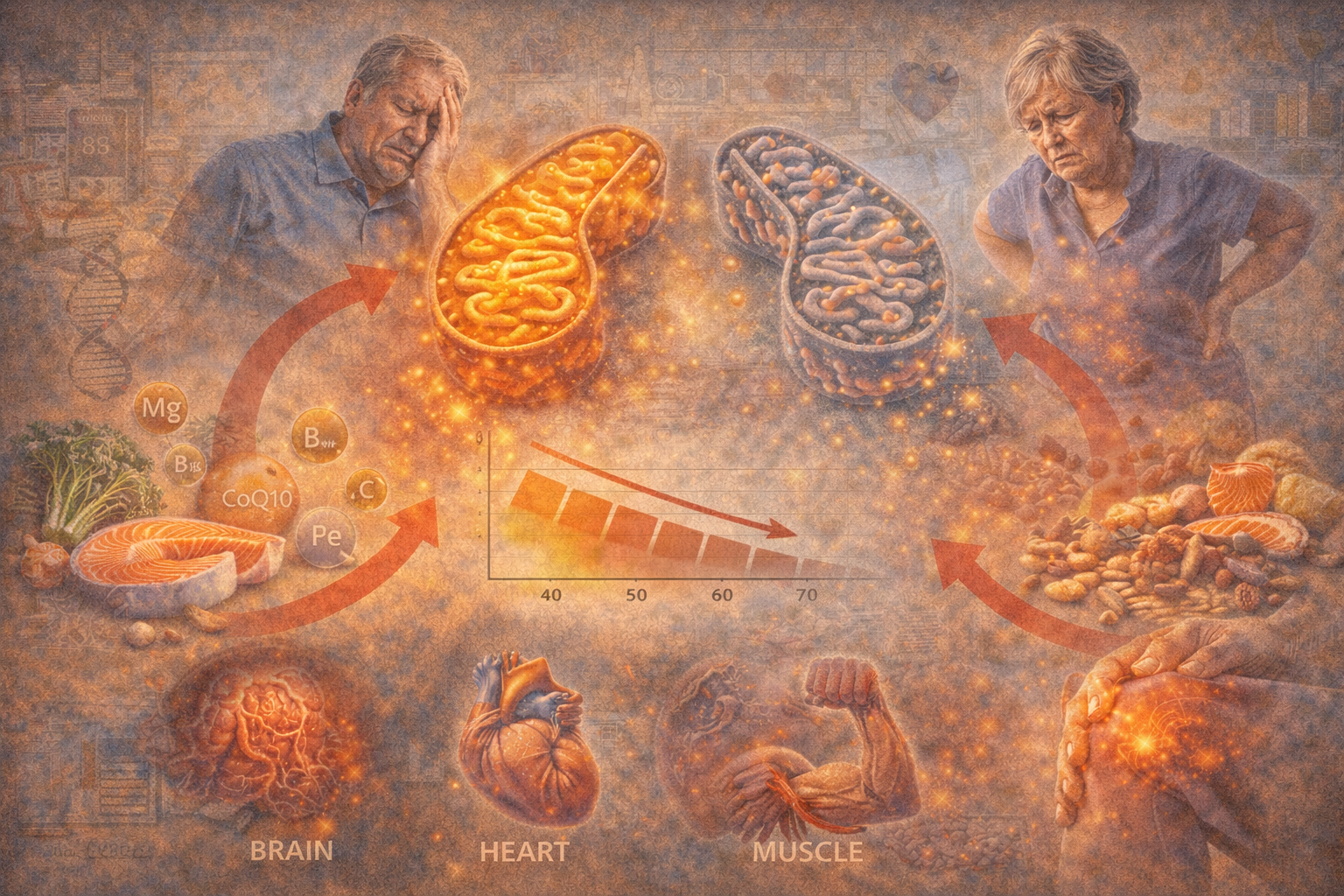

Fatigue is one of the most common complaints associated with aging, yet it remains one of the least clearly defined. It is often attributed to lifestyle, stress, or the natural passage of time, without deeper examination of the biological processes involved. Increasingly, however, researchers are converging on a unifying explanation rooted at the cellular level. Declining energy production within cells, driven largely by mitochondrial aging, is emerging as a central factor behind age-related fatigue and reduced physiological resilience.
Unlike acute tiredness that resolves with rest, age-related fatigue tends to persist. It is characterized by reduced stamina, slower recovery, and diminished capacity to adapt to physical or cognitive demands. Understanding why this occurs requires a closer look at how cells generate energy and how that process changes over time.
Mitochondria and the Biology of Energy
Mitochondria are often described as the power plants of the cell. Their primary role is to convert nutrients into adenosine triphosphate, the molecule that powers nearly every biological process, from muscle contraction to neurotransmitter release. Organs with high energy demands, such as the brain, heart, and skeletal muscle, are especially dependent on efficient mitochondrial function.
In youth and early adulthood, mitochondria are dynamic and adaptable. They respond to energy demands by increasing output, repairing damage, and replacing dysfunctional components through processes such as mitochondrial biogenesis and mitophagy. These mechanisms allow cells to maintain energy balance even under stress.
With aging, however, this adaptability declines. Mitochondria become less efficient, produce less usable energy, and accumulate structural damage. This gradual erosion of cellular energy capacity lies at the heart of mitochondrial aging.
What Mitochondrial Aging Involves
Mitochondrial aging refers to a progressive decline in mitochondrial function, quality control, and energy output. This decline is not uniform across tissues but tends to affect high-demand systems most noticeably. Muscles lose endurance, the brain experiences reduced cognitive stamina, and recovery from physical exertion slows.
Research summarized by the National Institutes of Health indicates that aging mitochondria generate more reactive oxygen species while producing less ATP. This combination creates a feedback loop where oxidative stress damages mitochondrial DNA and proteins, further impairing energy production.
Importantly, this process is gradual and often begins long before overt symptoms appear. By the time fatigue becomes noticeable, mitochondrial efficiency may have already declined significantly.
Energy Decline and the Experience of Fatigue
At the cellular level, fatigue reflects a mismatch between energy supply and demand. When mitochondria cannot meet energy requirements, cells prioritize essential functions and scale back noncritical processes. This conservation strategy may protect short-term survival but reduces overall performance.
In skeletal muscle, this manifests as early exhaustion and slower recovery. In the brain, it may appear as mental fatigue, reduced focus, or difficulty sustaining attention. In the immune system, energy shortfalls can impair surveillance and repair mechanisms, contributing to inflammation and vulnerability to illness.
Age-related fatigue, therefore, is not merely a sensation but a physiological state rooted in diminished cellular energy availability.
Why Energy Decline Accelerates With Age
Several factors contribute to the acceleration of mitochondrial aging. One of the most significant is reduced mitochondrial turnover. In younger cells, damaged mitochondria are regularly removed and replaced. With age, this quality control system becomes less effective, allowing dysfunctional mitochondria to accumulate.
Another factor is reduced metabolic flexibility. Aging cells often become less capable of switching between fuel sources, such as glucose and fat. This inflexibility places additional strain on mitochondria, particularly during periods of fasting, exercise, or stress.
Chronic low-grade inflammation, often referred to as inflammaging, further exacerbates mitochondrial dysfunction. Inflammatory signaling interferes with mitochondrial repair pathways and increases oxidative burden, compounding energy decline.
Lifestyle and Environmental Influences
While mitochondrial aging is influenced by genetic factors, lifestyle and environment play a substantial role in shaping its trajectory. Sedentary behavior reduces the stimulus for mitochondrial maintenance, leading to gradual functional decline. In contrast, regular physical activity has been shown to promote mitochondrial biogenesis and improve efficiency even in older adults.
Sleep quality also matters. Mitochondrial repair processes are closely tied to circadian rhythms. Disrupted sleep impairs these processes, accelerating energy decline. Harvard Health Publishing has noted that chronic sleep deprivation affects cellular energy metabolism and may contribute to persistent fatigue.
Dietary patterns influence mitochondrial health as well. Excessive reliance on refined carbohydrates can increase oxidative stress, while nutrient-poor diets may deprive mitochondria of essential cofactors required for energy production.

Nutrient Availability and Mitochondrial Function
Mitochondria require a steady supply of micronutrients to function optimally. These include magnesium, iron, B vitamins, coenzyme Q10, and other compounds involved in electron transport and ATP synthesis. As discussed in nutrition science literature, deficiencies in these nutrients can impair mitochondrial efficiency even in the absence of overt disease.
Educational resources focused on metabolic and cellular health, including those from Dr. Berg, often emphasize the importance of nutrient density in supporting mitochondrial processes. This perspective aligns with growing recognition that cellular energy decline is not solely a function of age but also of cumulative nutritional exposure.
When nutrient intake fails to meet cellular demands, mitochondrial aging may accelerate, intensifying fatigue and reducing adaptive capacity.
Mitochondrial Aging and Systemic Health
The impact of mitochondrial aging extends beyond fatigue. Reduced cellular energy availability affects nearly every system in the body. Cardiovascular endurance declines as cardiac muscle efficiency wanes. Cognitive resilience diminishes as neurons struggle to maintain signaling fidelity. Hormonal regulation becomes less precise as energy-dependent feedback systems falter.
These changes help explain why fatigue often coexists with other age-related concerns such as metabolic dysfunction, cognitive slowing, and reduced stress tolerance. Rather than being isolated symptoms, they may represent different expressions of a shared underlying energy deficit.
Scientific reviews published in journals such as Nature Reviews Molecular Cell Biology have increasingly framed aging itself as a disorder of energy regulation, with mitochondria playing a central role.
Rethinking Fatigue as an Energy Signal
Viewing fatigue through the lens of mitochondrial aging reframes it as a signal rather than a flaw. From this perspective, fatigue reflects the body’s attempt to balance limited energy resources against ongoing demands. Suppressing the symptom without addressing the underlying energy deficit may provide temporary relief but does not restore function.
This shift in understanding encourages a more systems-oriented approach to aging. Instead of targeting individual symptoms, attention turns to restoring cellular energy capacity and resilience.
Such an approach does not promise perpetual youth but aims to preserve functional vitality for as long as possible.
A Central Theme in Aging Research
The growing focus on mitochondrial aging reflects a broader trend in aging research toward foundational mechanisms rather than surface-level outcomes. By identifying cellular energy decline as a central driver, researchers can explore interventions that support multiple systems simultaneously.
This does not suggest a single solution. Mitochondrial health is influenced by movement, nutrition, sleep, stress exposure, and environmental factors. However, recognizing energy decline as a common thread allows for more coherent strategies aimed at preserving quality of life rather than merely extending lifespan.
Looking Ahead
Age-related fatigue is often treated as an inevitable consequence of getting older. Emerging research challenges this assumption by pointing to mitochondrial aging as a modifiable process shaped by long-term biological inputs.
While some decline in cellular energy production may be unavoidable, its rate and impact appear far more flexible than previously believed. Understanding how mitochondria age, and why they falter provides a framework for addressing fatigue at its source rather than managing it as an isolated symptom.
As aging science continues to evolve, cellular energy may prove to be one of the most important currencies of longevity. Protecting and supporting mitochondrial function does not simply reduce fatigue. It supports the fundamental capacity of the body to adapt, recover, and sustain life with resilience over time.