
The modern power grid is one of the most complex machines ever built. It’s a vast, interconnected network that keeps our homes, businesses, and entire economy running, 24 hours a day. We take it for granted, but the act of keeping this system in perfect balance is a monumental technological challenge, one that has evolved dramatically in recent years.
At the foundation of this entire system is the physical infrastructure—the millions of poles, towers, and wires that carry electricity across the country. A huge part of a modern grid strategy is using data and technology to proactively maintain these physical assets. Expert utility infrastructure support is no longer just about visual inspections; it’s about using sophisticated data analysis to predict and prevent failures before they happen, which is a key part of building a more resilient grid.
The grid is getting smarter every day. Here are three of the key ways technology is playing a part in keeping your lights on.
The Shift to Predictive Maintenance
For decades, the approach to maintaining the physical grid was largely reactive. A utility would often only replace a power pole or a transformer after it had already failed and caused an outage. Today, the industry is shifting to a much smarter, proactive model based on predictive analytics.
Utilities are now using a host of modern tools to assess the health of their infrastructure:
- Drones and helicopters equipped with high-resolution cameras and LiDAR can inspect hundreds of miles of power lines in a single day, identifying potential problems.
- Sensors on equipment can provide real-time data on performance and health.
- Artificial Intelligence (AI) algorithms can analyze this vast amount of data to predict which specific components are at the highest risk of failure.
This allows a utility to strategically replace a weakening pole or an aging transformer before it fails, preventing a future outage and allowing them to perform the work in a planned, scheduled way, rather than a panicked, middle-of-the-night emergency.
The “Self-Healing” Automated Grid
One of the most powerful advancements in grid technology is the ability for the system to automatically detect and isolate a problem, and then reroute power around it to minimize the number of customers affected. This is often referred to as a “self-healing” grid.
This is made possible by a network of smart sensors and automated switches. When a fault occurs—for example, a tree branch falls on a power line—a sensor can detect the problem in a fraction of a second. It then communicates with automated switches further down the line, which can instantly reroute power through a different circuit. This entire process can happen in milliseconds, often so quickly that the customers on the unaffected parts of the line never even see their lights flicker.
Managing a Two-Way, Renewable-Powered Flow
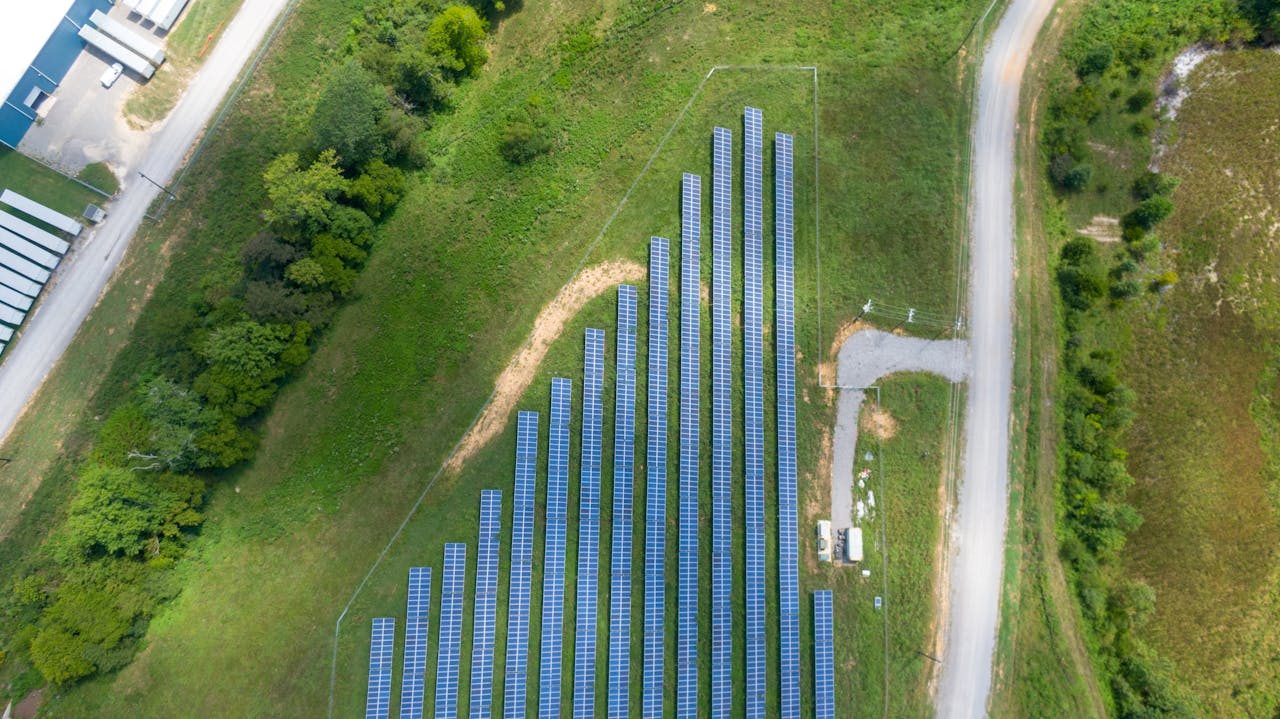
The traditional power grid was a simple, one-way street: power flowed from a large, central power plant, down the lines, to your home. The rise of renewable energy sources like wind and solar has completely changed this dynamic.
- Managing Variability: The sun isn’t always shining, and the wind isn’t always blowing. Utilities now use advanced AI-powered forecasting technology to predict the output of these renewable sources and sophisticated energy management software to balance this variable supply with customer demand in real-time.
- Managing a Two-Way Grid: The growth of “distributed energy resources” (DERs), like rooftop solar panels on homes and businesses, has turned the grid into a two-way street. Electricity now flows both to and from customers. This requires a much more intelligent and dynamic grid that can manage these complex, multi-directional flows of energy.
This integration of renewable and distributed energy is one of the biggest and most exciting challenges for the modern grid.
The power grid is in the middle of a massive technological transformation. It’s evolving from a simple mechanical system into a complex, intelligent, and digital network that is more resilient, more efficient, and cleaner than ever before.