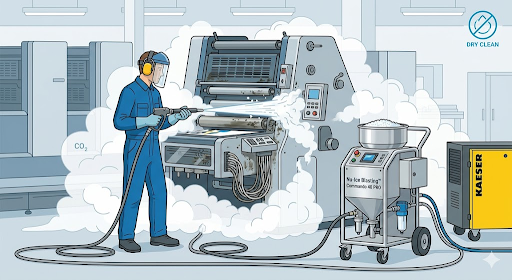

Industrial cleaning environments that involve precision rollers, electronic sensors, and surface-sensitive machinery often require maintenance methods that avoid moisture, abrasive media, or conductive materials. Residue buildup within printing systems can also contribute to longer maintenance windows and increased disassembly requirements during scheduled cleaning procedures. Nu-Ice Dry Ice Blasting™ manufactures industrial dry ice blasting equipment designed for applications where controlled cleaning processes are necessary for complex machinery and delicate surfaces. As interest in non abrasive printing press cleaning continues across manufacturing and print production environments, dry ice blasting is increasingly referenced as an alternative to traditional abrasive, wet, or chemical cleaning methods. The process uses compressed air and dry ice pellets that sublimate on contact, allowing cleaning procedures without introducing secondary blasting media residue, excess moisture, or electrically conductive materials into sensitive equipment areas.
Dry ice blasting is an industrial cleaning method that uses compressed air to accelerate dry ice pellets toward a surface during maintenance and cleaning procedures. The dry ice pellets are produced from solid carbon dioxide (CO2) and are introduced into the blasting system through a hopper and feed mechanism. As the pellets contact the targeted surface, they assist in loosening contaminants such as residue, buildup, oils, or production debris. The dry ice then sublimates, meaning it transitions directly from a solid into a gas rather than becoming liquid. Because the dry ice dissipates during the process, no secondary blasting media remains after cleaning. The method is commonly referenced in manufacturing and industrial maintenance environments where moisture-based cleaning may not be preferred.
Kinetic Impact
Compressed air propels dry ice pellets through a blasting hose and nozzle at high velocity. The contact between the pellets and the surface helps loosen contaminants and surface buildup during cleaning procedures.
Thermal Shock
Dry ice is extremely cold, creating a temperature differential when it contacts warmer contaminants or production residue. This rapid temperature change may contribute to weakening the bond between the contaminant and the underlying surface.
Sublimation Expansion
Upon impact, the dry ice sublimates from solid CO2 into gas. This expansion occurs at the surface level and assists in lifting loosened contaminants away from the equipment being cleaned.
A dry ice blasting machine typically operates through several connected components that work together during the cleaning process. An air compressor supplies the compressed air required to move dry ice pellets through the system and toward the cleaning surface. The dry ice hopper stores the pellets before they enter the blasting flow. A metering system regulates the amount of dry ice introduced into the air stream, allowing operators to manage pellet usage during operation. The blasting hose transports the air and dry ice mixture from the machine to the nozzle assembly. Finally, the nozzle directs the blasting stream toward the target area, helping operators reach different surfaces and equipment configurations during industrial cleaning procedures.
Founded in 1995, Nu-Ice Dry Ice Blasting™ manufactures industrial dry ice blasting equipment in the United States for a range of cleaning and surface preparation applications. The company produces dry ice blasting systems, related accessories, and equipment components designed for use in manufacturing, industrial maintenance, and facility cleaning environments. Its equipment lineup includes blasting units, pelletizers, nozzles, hoses, and support systems used during dry ice blasting operations. In industrial environments involving precision rollers, sensors, and production equipment, sensitive printing equipment dry ice cleaning methods are often referenced where moisture-based or abrasive cleaning approaches may not be preferred. Nu-Ice Dry Ice Blasting™ also provides operational information regarding compressed air requirements, dry ice usage, and equipment configuration for industrial cleaning procedures. The company identifies its manufacturing operations as Made in USA and references applications across multiple industrial sectors.
Nu-Ice Dry Ice Blasting™ equipment includes several integrated components used during dry ice blasting operations. Blasting systems are configured with blasting guns that direct compressed air and dry ice pellets toward the cleaning surface during operation. Various nozzle configurations are available to support different cleaning angles, surface access points, and equipment layouts. Hose assemblies connect the blasting unit to the nozzle system and transport the dry ice and compressed air mixture throughout the process. Certain system configurations also include integrated moisture separators and aftercoolers as part of the compressed air setup. These components are used to help manage moisture and temperature conditions within the air supply before it enters the blasting equipment. Equipment setups may also include controls for regulating pellet feed rates and blasting pressure during operation depending on the cleaning environment and equipment requirements.
Nu-Ice Dry Ice Blasting™ equipment specifications vary depending on the system configuration and intended industrial application. Product information published by the company includes machine dimensions, overall equipment weight, hopper storage capacity, compressed air requirements, and operating pressure ranges. Certain systems are designed with hopper capacities intended to hold dry ice pellets during extended blasting procedures, while air flow requirements may vary depending on nozzle selection and cleaning intensity. Operating pressure ranges are also adjustable within specified parameters to accommodate different surface conditions and maintenance environments. Published specifications additionally reference dry ice consumption ranges during operation, which may vary based on feed settings and blasting duration. Equipment documentation also outlines compressed air volume requirements and connection details needed to support consistent dry ice blasting performance in industrial maintenance and cleaning applications.
Preparation and Setup
Dry ice blasting operations typically begin with equipment inspection, dry ice loading, and compressed air connection. Operators prepare the blasting unit by filling the hopper with dry ice pellets and verifying hose, nozzle, and air supply connections before startup.
Safety Requirements
Operational guidance includes the use of appropriate personal protective equipment and ventilation considerations when working in enclosed or industrial environments. Equipment setup also involves checking compressed air levels and confirming that blasting components are securely connected.
Typical Workflow Steps
During operation, compressed air moves dry ice pellets through the blasting hose and nozzle assembly toward the cleaning surface. Operators regulate blasting pressure and pellet feed settings based on the equipment and cleaning conditions. Following operation, the blasting system, hoses, and remaining dry ice are typically cleared and stored according to equipment handling procedures.
Nu-Ice Dry Ice Blasting™ equipment is referenced across a range of industrial and commercial cleaning environments where dry ice blasting systems are used during equipment maintenance and surface preparation procedures. In manufacturing and production facilities, dry ice blasting equipment is used around machinery, tooling, conveyors, molds, and production lines where residue buildup may occur during operations. In food processing environments, dry ice blasting is also referenced for cleaning equipment used in production and sanitation workflows where dry cleaning methods may be preferred.
The equipment is additionally associated with historical restoration and delicate surface applications involving materials that require controlled cleaning approaches during maintenance procedures. Industrial sectors such as automotive and aerospace also utilize dry ice blasting systems for cleaning parts, tools, assemblies, and manufacturing equipment. In electrical and specialty cleaning environments, dry ice blasting may be used around generators, motors, electrical cabinets, and other industrial systems where moisture-based cleaning methods may not be suitable. Nu-Ice Dry Ice Blasting™ publishes equipment information for use across these industrial applications and operational environments.
Dry ice blasting is commonly referenced as a dry cleaning process that does not introduce water or chemical cleaning agents into the blasting procedure. During operation, the dry ice sublimates from solid CO2 into gas, which means no secondary blasting media remains after cleaning. The process is also associated with non-abrasive surface interaction in applications involving equipment, machinery, and sensitive components. In industrial environments where electrical systems are present, non conductive dry ice blasting methods are often referenced because dry ice does not conduct electricity during operation. Operational considerations may include ventilation requirements, compressed air supply setup, dry ice handling procedures, and storage conditions for maintaining pellet quality prior to equipment use.
Nu-Ice Dry Ice Blasting™ equipment configurations may include a range of accessories and support components used during dry ice blasting operations. Hose assemblies and interchangeable nozzles are available for different equipment layouts, cleaning angles, and surface access requirements. Air supply systems may also incorporate aftercoolers and moisture separators to help regulate compressed air conditions before entering the blasting unit. Additional system considerations include dry ice storage practices, equipment cleaning after operation, and inspection of hoses, fittings, and blasting components prior to use. Published equipment information also outlines compressed air connection requirements and accessory compatibility for operational setup.
- How are dry ice pellets used during industrial cleaning procedures?
Dry ice pellets are introduced into a blasting machine hopper and accelerated through a hose and nozzle using compressed air. During operation, the pellets contact the target surface and then sublimate from solid CO2 into gas as part of the cleaning process. - What types of equipment can dry ice blasting systems be used around?
Dry ice blasting equipment is referenced across manufacturing, food processing, automotive, aerospace, electrical, and restoration environments. Applications may involve machinery, production lines, molds, rollers, motors, tooling, and other industrial equipment requiring maintenance or surface cleaning procedures. - What compressed air setup is typically required for dry ice blasting equipment?
Dry ice blasting systems operate using compressed air supplied through an external air compressor. Equipment documentation may reference airflow ranges, operating pressure requirements, moisture management components, and hose connection specifications depending on the blasting configuration being used. - Are ventilation and protective equipment considered during dry ice blasting operations?
Operational guidance commonly includes ventilation considerations and the use of personal protective equipment during dry ice blasting procedures. Industrial environments may also require checks for air supply conditions, hose connections, and proper equipment handling before system operation begins. - How does dry ice blasting differ from traditional abrasive blasting methods?
Dry ice blasting uses dry ice pellets and compressed air rather than abrasive media such as sand, grit, or other blasting materials. The dry ice sublimates during operation, meaning the blasting media transitions into gas instead of remaining behind after cleaning procedures. - Can dry ice blasting be used in environments with sensitive or delicate surfaces?
Dry ice blasting is referenced in applications involving delicate surfaces, electronic equipment, printing components, historical restoration materials, and industrial systems where operators may prefer a dry cleaning process without moisture or abrasive blasting media. - What handling considerations are associated with dry ice blasting systems?
Operational considerations may include dry ice storage conditions, compressed air quality, ventilation requirements, and routine inspection of hoses, nozzles, and blasting components. Equipment setup procedures also involve loading dry ice pellets and verifying system connections before operation.
As industrial facilities continue evaluating cleaning processes for sensitive machinery and production equipment, dry ice blasting remains part of ongoing discussions surrounding maintenance procedures that involve minimal moisture and reduced secondary cleanup requirements. Nu-Ice Dry Ice Blasting™ continues to manufacture dry ice blasting equipment in the United States for applications across manufacturing, food processing, restoration, automotive, aerospace, and industrial maintenance environments. The company’s published equipment information outlines operational components, compressed air requirements, dry ice handling procedures, and accessory configurations associated with dry ice blasting systems. Equipment configurations may vary depending on the intended industrial application, surface conditions, and operational setup requirements. As facilities review different approaches to equipment cleaning and maintenance workflows, dry ice blasting systems continue to be referenced in environments involving precision components, production equipment, and industrial surface preparation procedures.