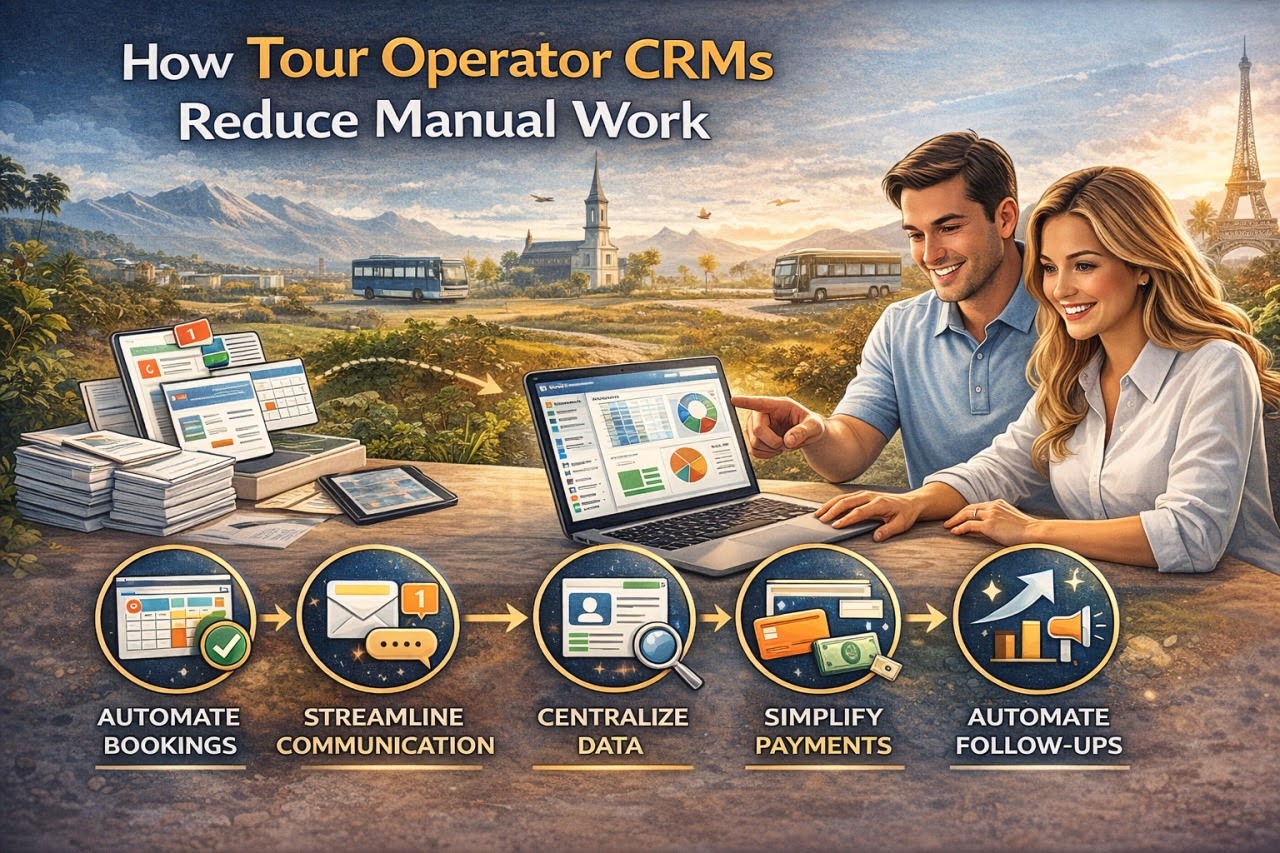

Running a tour business involves managing bookings, communicating with customers, handling payments, and coordinating schedules. Without the right systems in place, these tasks can quickly become overwhelming and time-consuming.
That’s why many businesses are turning to a Tour operator CRM to streamline operations and reduce manual work. By automating repetitive tasks and centralizing data, CRMs allow tour operators to focus more on delivering great experiences and less on administrative work.
Let’s explore how a CRM can simplify your workflow and improve efficiency.
Automating Booking Management
Managing bookings manually can lead to errors, double bookings, and wasted time.
A CRM helps by:
- Automatically recording bookings
- Syncing availability in real time
- Sending instant confirmations to customers
With a Tour operator CRM, the entire booking process becomes faster, more accurate, and far less labor-intensive.
Streamlining Customer Communication
Responding to emails, inquiries, and follow-ups can take up a significant portion of your day.
CRMs simplify communication by:
- Automating email responses and confirmations
- Storing customer information in one place
- Sending reminders and updates automatically
This ensures consistent communication without requiring constant manual effort.
Centralizing Customer Data
Keeping track of customer details across multiple platforms can be challenging.
A CRM centralizes:
- Contact information
- Booking history
- Preferences and special requests
With all data in one system, a Tour operator CRM eliminates the need to search through emails or spreadsheets, saving valuable time.
Simplifying Payment Processing
Handling payments manually increases the risk of errors and delays.
A CRM can:
- Integrate with payment systems
- Track transactions automatically
- Generate invoices and receipts
This reduces administrative work and ensures a smoother payment experience for both the business and the customer.
Automating Follow-Ups and Marketing
Staying in touch with past customers is important for repeat business, but manual follow-ups can be time-consuming.
CRMs help by:
- Sending automated follow-up emails
- Managing email marketing campaigns
- Offering promotions based on customer behavior
With a Tour operator CRM, businesses can maintain engagement without additional workload.
Managing Schedules and Availability
Coordinating tours, staff, and resources manually can be complex.
A CRM simplifies scheduling by:
- Providing real-time availability updates
- Preventing overbooking
- Coordinating staff assignments
This ensures smooth operations and reduces the need for constant manual adjustments.
Improving Team Collaboration
When information is scattered, it can be difficult for teams to stay aligned.
CRMs improve collaboration by:
- Giving all team members access to the same data
- Tracking tasks and responsibilities
- Reducing miscommunication
This leads to better coordination and more efficient workflows.
Reducing Errors and Improving Accuracy
Manual processes often lead to mistakes, especially when handling large volumes of data.
A CRM minimizes errors by:
- Automating repetitive tasks
- Ensuring consistent data entry
- Providing real-time updates
With a Tour operator CRM, businesses can operate more reliably and professionally.
Saving Time for Higher-Value Tasks
One of the biggest benefits of a CRM is the time it frees up.
Instead of focusing on administrative tasks, businesses can:
- Improve customer experiences
- Develop new tour offerings
- Focus on growth strategies
Automation allows teams to work smarter, not harder.
FAQs
What is a Tour operator CRM?
It’s a customer relationship management system designed specifically for tour businesses to manage bookings, customers, and operations.
How does a CRM reduce manual work?
It automates tasks like booking management, communication, payments, and follow-ups.
Is a CRM suitable for small tour operators?
Yes. CRMs can benefit businesses of all sizes by improving efficiency and organization.
Can a CRM improve customer experience?
Absolutely. Faster communication and personalized service lead to better customer satisfaction.
Does a CRM replace staff?
No. It supports staff by reducing repetitive tasks, allowing them to focus on more important work.
Final Thoughts
Managing a tour business doesn’t have to mean juggling endless manual tasks.
By implementing a Tour operator CRM, businesses can streamline operations, reduce errors, and save valuable time. From automating bookings to improving communication and collaboration, a CRM transforms how tour operators manage their day-to-day activities.
If you’re looking to improve efficiency and focus on growing your business, investing in the right CRM system is a smart and strategic move.