
What this covers
-
Contents
-
Why the Wettest Wall Faces Uphill
-
Reading the Pattern up a Wall
-
Drainage Components and How Each Fails Quietly
-
The Reason Interior Waterproofing Comes Back
-
Split Levels and the Junctions They Create
-
Planters, Irrigation and Other Accidental Reservoirs
-
Seasonality Is a Diagnostic Tool
-
The Marine Layer Removes the Recovery Period
-
What an Inspection on a Slope Covers
-
Why the Recommendation Is Usually Outside
On flat ground, rain lands, drains and leaves. The mental model most people carry about water and buildings is built on that, and it is why damp on a sloping site so often gets misdiagnosed.
Subsurface water travels laterally through permeable ground. It enters the soil uphill, moves sideways, and keeps moving until something interrupts it. A house cut into a slope is an interruption. So is its retaining wall, its driveway, its footings and its garden terracing.
Contents
-
Why the Wettest Wall Faces Uphill
-
Reading the Pattern Up a Wall
-
Drainage Components and How Each Fails Quietly
-
The Reason Interior Waterproofing Comes Back
-
Split Levels and the Junctions They Create
-
Planters, Irrigation and Other Accidental Reservoirs
-
Seasonality Is a Diagnostic Tool
-
The Marine Layer Removes the Recovery Period
-
What an Inspection on a Slope Covers
-
Why the Recommendation Is Usually Outside
Why the Wettest Wall Faces Uphill
A retaining wall holds back saturated soil. It is under hydrostatic pressure whenever that soil is wet, and the pressure is applied to its buried face continuously rather than during a weather event.
The consequence is that the wettest part of a hillside house frequently has nothing to do with its roof, its plumbing, or the weather that week. It is the uphill wall, and the water reaching it fell somewhere further up the hill days earlier.
This runs against the intuition that damp comes from above, and it is the single most useful thing to know before commissioning an inspection on a sloping lot. The question is not where the leak is. The question is which walls are in contact with grade.
Reading the Pattern up a Wall
A moisture meter reading pattern indicates the direction of arrival, and this is where a competent survey earns its money.
|
Pattern of readings |
What it indicates |
|
Highest at the base, falling with height |
Rising from below, or lateral entry at footing level |
|
Even from base to head height |
Hydrostatic pressure across the buried face |
|
Highest at a band partway up |
Entry at a specific defect, often a service penetration |
|
Highest at the top, falling downward |
Coming from above; roof, gutter or upper junction |
Four readings at four heights on one wall discriminate between four completely different problems, and the exercise takes minutes. A single reading, or a reading taken only where the stain is, distinguishes nothing.
Drainage Components and How Each Fails Quietly
|
Component |
Job |
How it fails without announcing it |
|
Perimeter drain |
Carry subsurface water away from the footing |
Silts up over years; no symptom until the wall reads wet |
|
Weep holes |
Relieve pressure through a retaining wall |
Blocked by soil movement, render or planting |
|
Waterproof membrane on the buried face |
Keep water out of the structure |
Degrades with age; entirely inaccessible once backfilled |
|
Surface swales and grading |
Direct runoff away before it soaks in |
Flattened by later groundwork, or reversed by a new patio |
|
Downpipe discharge |
Move roof water clear of the building |
Discharges to a soakaway right beside the footing |
A perimeter drain relies on remaining unobstructed, and decades of soil movement fill it. Nothing about that failure is visible, audible or dated. It is simply less effective every year until a wall that was fine becomes a wall that is not, and the owner looks for a recent cause that does not exist.
The Reason Interior Waterproofing Comes Back
Interior waterproofing blocks water at the inner face. This is the most commonly attempted remedy and the most reliably disappointing one.
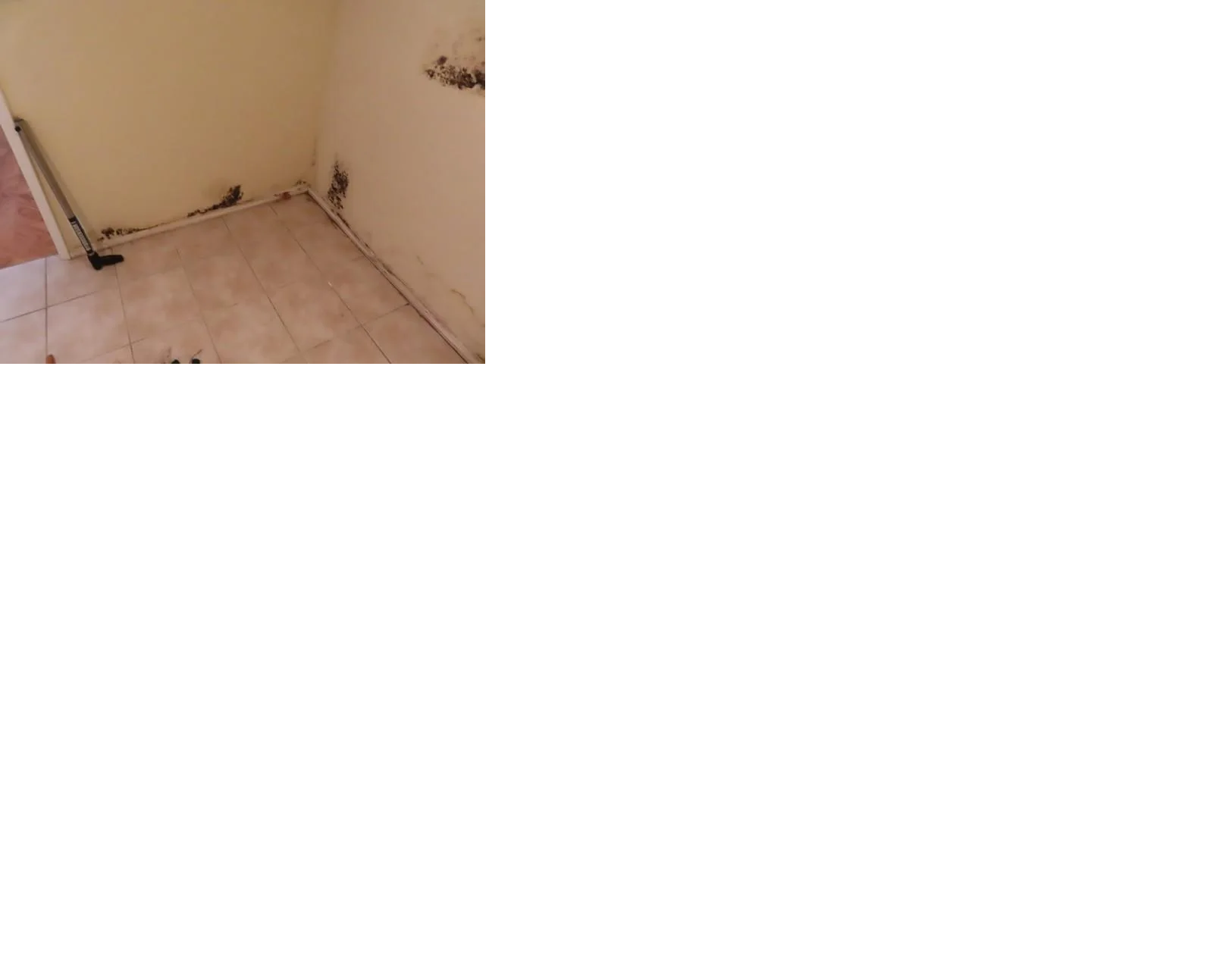
Sealing the interior surface of a wall that is being fed from behind stops the water appearing. It does not stop it arriving. The water continues to reach the wall, accumulates behind the new barrier, and emerges at the first place the barrier does not cover, which is almost always the junction where the wall meets the floor.
The owner then has a floor problem where they previously had a wall problem, six to eighteen months later, and the two rarely get connected. The source was never inside the building.
Split Levels and the Junctions They Create
Houses on a slope step down through the site rather than sitting on a single pad. Each step is a change in level and usually a change in construction, and those junctions are where flashing and drainage details become complicated.
Lower-level rooms with earth on one side and air on the other behave like basements whether or not anyone calls them that. Airflow through those spaces is generally poor, temperatures are lower, and they are frequently used for storage, which means nobody spends time in them and nobody notices a change.
Planters, Irrigation and Other Accidental Reservoirs
A raised planter holds wet soil against a wall, above the level the wall was detailed for. It is one of the most common findings on hillside properties and one of the cheapest to correct.
Irrigation is the other. A sprinkler line running against a foundation for years produces the same result as a slow plumbing leak, delivered on a timer, and nobody thinks of it as a leak because it is doing exactly what it was installed to do.
Both belong to a category worth naming: features that are working correctly and causing the problem. They are easy to miss precisely because there is nothing broken to find.
Seasonality Is a Diagnostic Tool
Southern California receives the great majority of its annual rainfall in a short winter wet season. Hillside soil moisture is therefore strongly seasonal, and a wall fed by subsurface water reads very differently in February than in September.
That is inconvenient for scheduling and useful for diagnosis. Damp that appears every winter and clears every summer is close to a signature for soil moisture rather than a building defect. Damp that persists through a dry fall is telling a different story.
Where there is a choice, reading a wall while it is behaving badly gives numbers that are far easier to interpret than the same wall six months later.
There is a practical consequence for scheduling. A survey booked in September on a property whose problem is seasonal will find a wall that has spent five months drying out, and the readings will be unremarkable. The same wall in February reads clearly. Where an owner has a choice and no urgency, booking against the season rather than against the calendar produces a far more useful result for the same fee.
The Marine Layer Removes the Recovery Period
Coastal slopes catch the marine layer earlier and hold it longer than streets further inland. Mornings stay damp and elevations facing the water dry slowly.
On its own that is unremarkable. Combined with a wall already carrying soil moisture from the uphill side, it removes the daily drying period that would otherwise keep the situation stable. The wall never gets a chance to shed what it took on, and a condition that would be seasonal somewhere drier becomes continuous.
What an Inspection on a Slope Covers
Moisture readings along every wall in contact with grade, at multiple heights, producing the pattern described above. Thermal imaging to map how far a wet area actually extends, which on a retaining wall is routinely wider than the visible mark.
Physical inspection of sub-floor spaces, lower-level rooms and any accessible drainage, plus a walk of the site above the building, because the source is frequently uphill of the wall being complained about. Relative humidity in the enclosed spaces. Sampling only where the readings justify it, against a same-day outdoor control, through an accredited laboratory.
One more reason to walk the site rather than only the building: on a sloping lot the relevant history is often a neighbor’s, not the owner’s. A retaining wall rebuilt uphill, a driveway resurfaced, a pool installed, a swale filled in during a remodel. Any of those changes where water goes, and none of them appear in the records of the property that ends up wet.
Why the Recommendation Is Usually Outside
An independent inspector performs no remediation, and on a drainage problem that matters more than usual, because the honest answer is very often that the fix is not inside the house at all.
Clearing a silted perimeter drain, removing a planter from against a wall, moving a sprinkler line, correcting a downpipe discharge. These are cheap corrections carried out by a groundworker or a drainage contractor, and a firm selling interior remediation has limited reason to lead with them.
Mold inspection for hillside and bluff properties is carried out on that basis by a South Bay firm working from an El Segundo office, which inspects and tests and performs no removal work.
The short version. On a slope the water arrives sideways, from somewhere uphill, days after it fell. The wall it reaches has no defect and the building has no leak.
Anyone treating that as an interior problem is working on the wrong side of the wall.