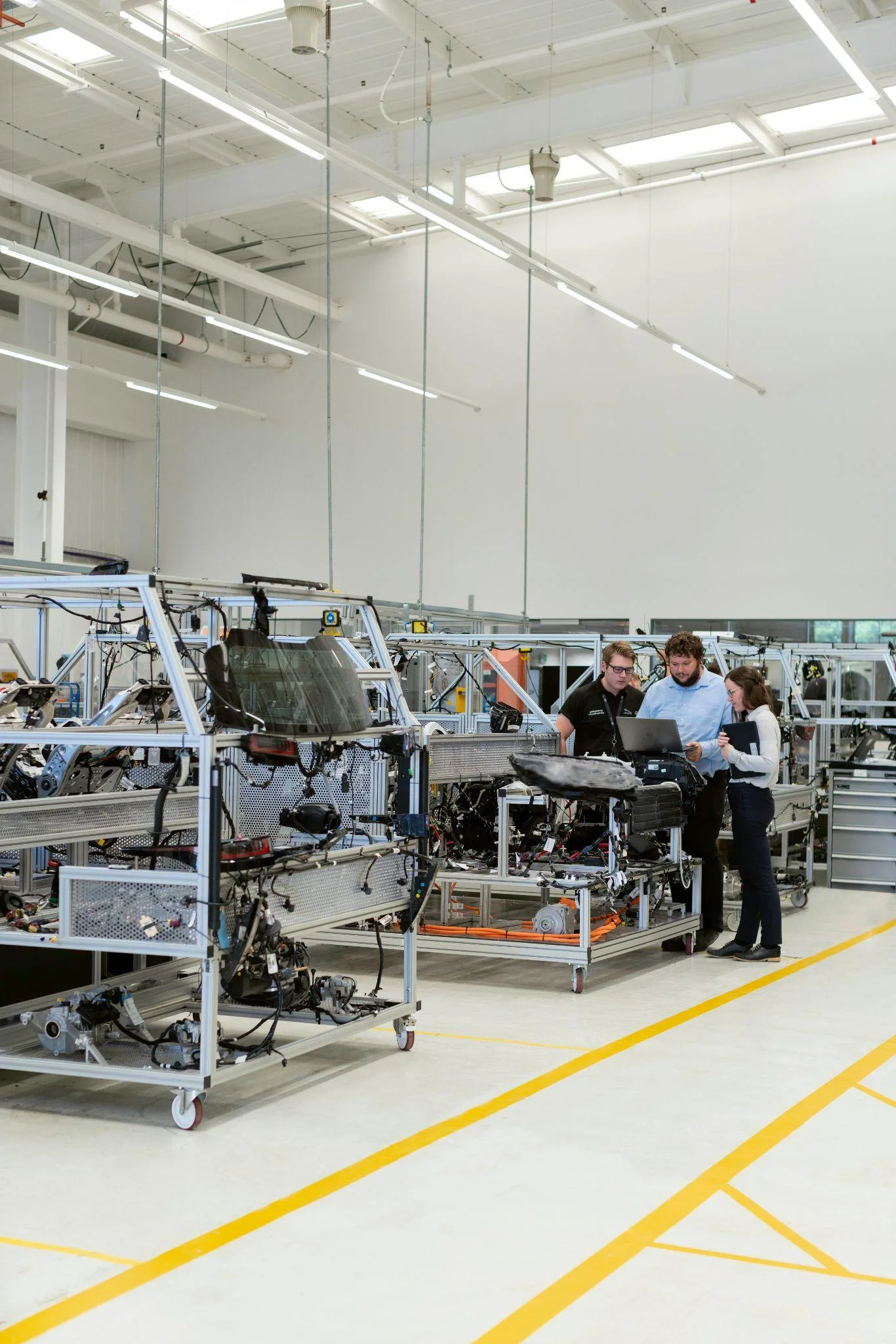

Photo: ThisisEngineering
Manufacturers are facing a difficult equation in 2026: the costs of doing business are rising while economic and policy uncertainty makes those costs harder to predict. Persistent inflation is adding pressure to manufacturers already navigating changing input prices, supply-chain uncertainty, and shifting policy conditions.
Companies can negotiate with suppliers, adjust purchasing strategies, and look for ways to reduce overhead. But there is another source of cost that is easier to overlook because it happens inside the production process itself: operational inefficiency.
When materials, labor, energy, and transportation become more expensive, every avoidable mistake becomes more expensive, too. A manufacturing error doesn’t simply create a quality problem. It can consume additional material, machine time, labor hours, and production capacity. In an environment where margins are already under pressure, those costs can quickly add up.
That makes the factory floor an increasingly important place to look for savings.
Inflation Magnifies the Cost of Inefficiency
Inflation doesn’t necessarily create operational inefficiency. Most manufacturers already contend with scrap, rework, inconsistent processes, and production delays.
What changes during periods of higher costs is the financial consequence of those problems.
Consider a part that has to be remade because it was assembled incorrectly. The cost isn’t limited to the replacement material. The original material has already been consumed.
Employees have already spent time producing the defective part. Equipment has already been running. The production schedule may have to be adjusted, and the replacement could require expedited transportation.
When those underlying inputs become more expensive, the same mistake carries a larger price tag.
That is why controlling waste can become particularly important during periods of economic uncertainty. Manufacturers cannot determine the price of every material they purchase or predict every change in the broader economy. But they can influence how effectively those materials, people, and machines are used once they reach the factory.
The question becomes less about finding cheaper inputs and more about getting the most value possible from the inputs a company already has.
Where Costs Become Physical
The factory floor is where decisions made elsewhere in the organization ultimately become physical products.
Engineering teams may update a design. Procurement teams may secure materials. Operations teams may establish production targets. But eventually, a worker has to interpret that information and execute a process correctly.
That final step is easy to underestimate.
Manufacturers may have sophisticated engineering systems and increasingly connected production equipment while still relying on static PDFs, printed documentation, or instructions that require workers to interpret information for themselves.
If an instruction is unclear or hasn’t been updated to reflect an engineering change, the consequences can move quickly from an information problem to a financial one. A worker may follow the instructions exactly and still produce the wrong result if the information they were given was already outdated.
Garth Coleman, CEO of Canvas Envision, argues that this disconnect deserves more attention as manufacturers look for ways to protect productivity.
The issue isn’t necessarily that workers aren’t capable of adapting. It is that manufacturers are often asking them to compensate for gaps between digital engineering systems and the information available at the point of work.
That creates an avoidable layer of interpretation between what a manufacturer knows and what its workforce actually does.
The Hidden Cost of "Good Enough" Instructions
For years, manufacturers have accepted a certain amount of friction in how information reaches the factory floor.
An engineering change might be released in a digital system, while the corresponding work instruction still requires someone to manually update a document. A process may be understood perfectly by an experienced operator but difficult for a new employee to reproduce. A troubleshooting step may exist in someone’s experience but nowhere in the formal workflow.
Each individual gap can appear relatively small.
The problem is what happens when those gaps are repeated across hundreds of workers, multiple shifts, or several facilities.
A process that depends on interpretation will naturally produce variation. And variation makes output harder to predict.
For manufacturers operating under economic pressure, unpredictability is expensive.
It can mean more rework, inconsistent quality, slower onboarding, greater dependence on experienced workers, and production schedules that are harder to maintain.
The goal, then, isn’t simply to give workers more information. It is to make the right information easier to understand and act on when the work is actually happening.
Turning Clarity Into a Cost-Control Strategy
This is where visual execution can become more than a digital transformation initiative.
Visual, step-by-step work instructions can provide workers with current guidance directly at the point of execution. Instead of forcing employees to interpret multiple documents or rely on tribal knowledge, the workflow can show them what needs to happen, in the sequence required to complete the task.
For complex products and processes, that distinction matters.
Clearer guidance can reduce the opportunities for interpretation that lead to avoidable errors. Connecting instructions to current product and engineering information can also reduce the risk that workers are executing against outdated revisions.
Companies such as Canvas Envision are working to bridge this gap by creating digital execution environments that connect product information with interactive work instructions.
The objective isn’t simply to replace a paper document with a screen. It is to create a more direct connection between the information used to define a product and the information used to build it.
That connection can help manufacturers improve consistency while reducing the operational costs associated with mistakes.
Resilience Starts With What Manufacturers Can Control
Economic uncertainty will continue to create variables manufacturers cannot eliminate.
Companies cannot dictate the price of raw materials. They cannot guarantee that transportation costs or energy prices will remain stable. And they cannot predict every policy decision that could affect their operations.
But they can examine the costs generated by their own processes.
How often does work need to be repeated? How much scrap is being generated? How long does it take a new employee to become productive? How often do workers encounter outdated or unclear instructions? How much production capacity is lost because a mistake wasn’t caught until later in the process?
Those questions shift the conversation from reacting to external pressures to improving internal control.
That is particularly important when margins are tight. A manufacturer may not be able to prevent a supplier from raising prices, but it can work to ensure that the material it purchases is not wasted because of an avoidable execution error.
The same principle applies to labor. When skilled workers are expensive and difficult to replace, making their time more productive becomes increasingly valuable. A system that helps employees execute correctly and consistently can reduce the amount of time spent correcting mistakes or informally transferring knowledge.
In this environment, operational clarity becomes a form of resilience.
When Costs Rise, Execution Matters More
Inflation forces manufacturers to pay closer attention to every dollar that enters and leaves the production process. That scrutiny shouldn’t stop at procurement or energy consumption.
The factory floor is another place where companies can protect value.
Better execution cannot insulate manufacturers from inflation, but it can help ensure that rising costs aren’t compounded by preventable waste. Clearer instructions, more consistent processes, and better connections between engineering information and frontline work can help manufacturers make better use of the resources they already have.
The manufacturers best positioned to navigate economic uncertainty may not be those that can control every cost. They may be the ones that become exceptionally good at controlling the costs they can influence.
When manufacturers can’t control the price of what comes into the factory, controlling what happens once it gets there becomes one of the clearest ways to protect the bottom line.