
In the rapidly evolving digital era, enterprises are under immense pressure to keep their IT environments efficient, resilient, and highly available. This growing complexity—fueled by cloud adoption, hybrid architectures, edge computing, and surging data volumes—has brought IT Operations Analytics (ITOA) into the spotlight. ITOA leverages data, machine learning, and advanced monitoring capabilities to improve decision-making, automate routine tasks, prevent outages, optimize performance, and provide complete visibility across IT infrastructure.
Understanding the Rise of IT Operations Analytics
IT teams today face environments that generate enormous amounts of structured and unstructured data—from logs and events to network metrics, cloud telemetry, and application performance signals. Traditional monitoring tools were never built to handle this scale or complexity.
IT Operations Analytics addresses this gap by applying advanced analytics, anomaly detection, predictive insights, and AI-driven automation to operational data. The goal is simple yet essential: enhance availability, reduce downtime, prevent failures proactively, and empower IT teams with real-time intelligence, not just reactive alerts.
Some of the key drivers accelerating ITOA adoption include:
- Increasing complexity of hybrid and multi-cloud environments
- Growing need for proactive detection and root-cause analysis
- Rising dependency on digital services and real-time user experiences
- Shift toward AIOps (Artificial Intelligence for IT Operations)
- Continuous demand for cost optimization across IT footprints
Market Growth and Future Outlook
The ITOA sector is experiencing unprecedented growth as enterprises prioritize automation, predictive analytics, and unified observability.
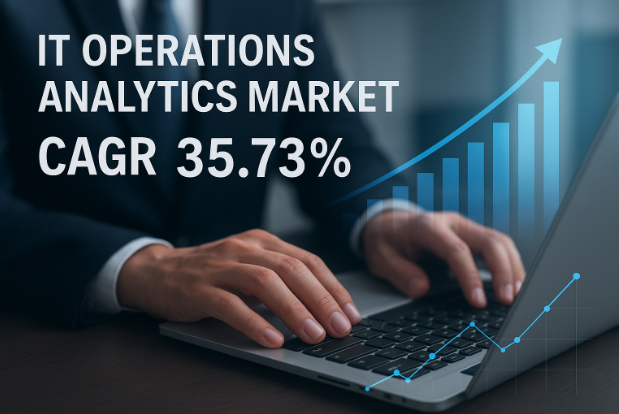
IT Operations Analytics Market was valued at USD 22.30 billion in 2023 and is expected to reach USD 347.38 billion by 2032, growing at a CAGR of 35.73% from 2024-2032. This extraordinary expansion highlights how critical analytics-driven operations have become for business continuity, customer satisfaction, and operational excellence. With cloud migration accelerating, cybersecurity threats rising, and digital experiences becoming business differentiators, companies are investing heavily in platforms that provide full-stack visibility, intelligent analysis, and automated remediation.
The market’s exponential growth is also fueled by the convergence of ITOA with AIOps, enabling machine learning models to analyze anomalies, correlate events, and recommend—or even execute—actions in real time. As organizations generate petabytes of data from distributed systems, AIOps-ready ITOA tools will become indispensable.
Leading IT Operations Analytics Companies Transforming the Landscape
A growing number of technology providers are delivering robust ITOA platforms equipped with AI-driven insights, deep observability features, and predictive intelligence. These companies are at the forefront of helping enterprises modernize operations and adopt data-centric IT management practices.
1. Splunk
Splunk remains one of the most recognized names in operational intelligence. Its platform enables advanced log analytics, anomaly detection, and real-time visibility. Splunk’s machine-learning toolkit empowers organizations to predict outages, detect irregular behavior, and optimize system performance across massive infrastructures.
2. Dynatrace
Dynatrace offers an AI-powered observability platform designed to deliver automated root-cause analysis and real-time insights across applications, infrastructure, and cloud environments. Its Davis AI engine sets the benchmark for intelligent monitoring, helping enterprises eliminate guesswork in IT operations.
3. New Relic
New Relic provides full-stack observability and deep telemetry analytics. The platform is widely used for application performance monitoring (APM) and infrastructure analysis, offering businesses the ability to understand performance issues quickly and accurately through unified dashboards and powerful analytics capabilities.
4. IBM
IBM’s ITOA solutions combine automation, AI-driven insights, and enterprise-grade analytics. With its long-standing expertise in IT management, IBM provides powerful tools for identifying patterns, optimizing workloads, and improving availability across hybrid systems.
5. Elastic (Elastic Stack)
Elastic delivers scalable search and analytics solutions that are widely adopted for log management, security analytics, and infrastructure monitoring. Its ability to ingest massive data volumes and provide near real-time insights makes it a preferred choice for organizations with distributed systems.
6. SolarWinds
SolarWinds offers a comprehensive suite of monitoring and analytics capabilities that support network performance, infrastructure health, and application operations. Its intuitive dashboards and robust data analytics features make it popular among growing enterprises seeking visibility and reliability.
7. Cisco
Cisco provides IT operations analytics through its network intelligence and observability platforms. With extensive capabilities across network analytics, security telemetry, and performance monitoring, Cisco helps enterprises maintain resilient IT environments across both physical and cloud networks.
8. Broadcom (formerly CA Technologies)
Broadcom delivers enterprise-class AIOps and monitoring solutions designed to enhance performance, availability, and capacity planning. Its analytics-driven approach helps organizations optimize cost, reduce outages, and streamline IT processes.
9. Google Cloud Operations Suite
Google’s operations suite integrates logging, monitoring, and tracing with built-in analytics for cloud-native applications. It is known for its scalability, automation, and seamless alignment with Google Cloud workloads.
10. Microsoft Azure Monitor
Azure Monitor provides intelligent analytics for cloud environments, enabling real-time performance insights, log analysis, and anomaly detection across Azure services. Its tight ecosystem integration makes it ideal for enterprises heavily invested in Microsoft infrastructure.
Why Leading Companies Are Investing Heavily in ITOA
Modern enterprises recognize that traditional reactive IT models are not sustainable in an always-on digital environment. Leading organizations are increasingly turning to IT Operations Analytics to:
- Prevent outages before they impact customers
- Improve the reliability of digital experiences
- Minimize operational and maintenance costs
- Correlate performance data across complex systems
- Enable faster incident response and automated remediation
- Enhance security posture through anomaly recognition
The move toward automation and intelligence in operations is no longer optional—it’s a competitive necessity.
The Road Ahead: What to Expect
As IT ecosystems continue to expand across the cloud, edge, and on-premise environments, ITOA platforms will play an even more strategic role. Future innovations will likely include deeper integration with generative AI, self-healing infrastructure, automated workflow orchestration, and enhanced predictive modeling.
Enterprises that adopt robust ITOA solutions will not only streamline IT operations but also gain a strategic advantage by ensuring reliability, continuity, and high-performing digital services.