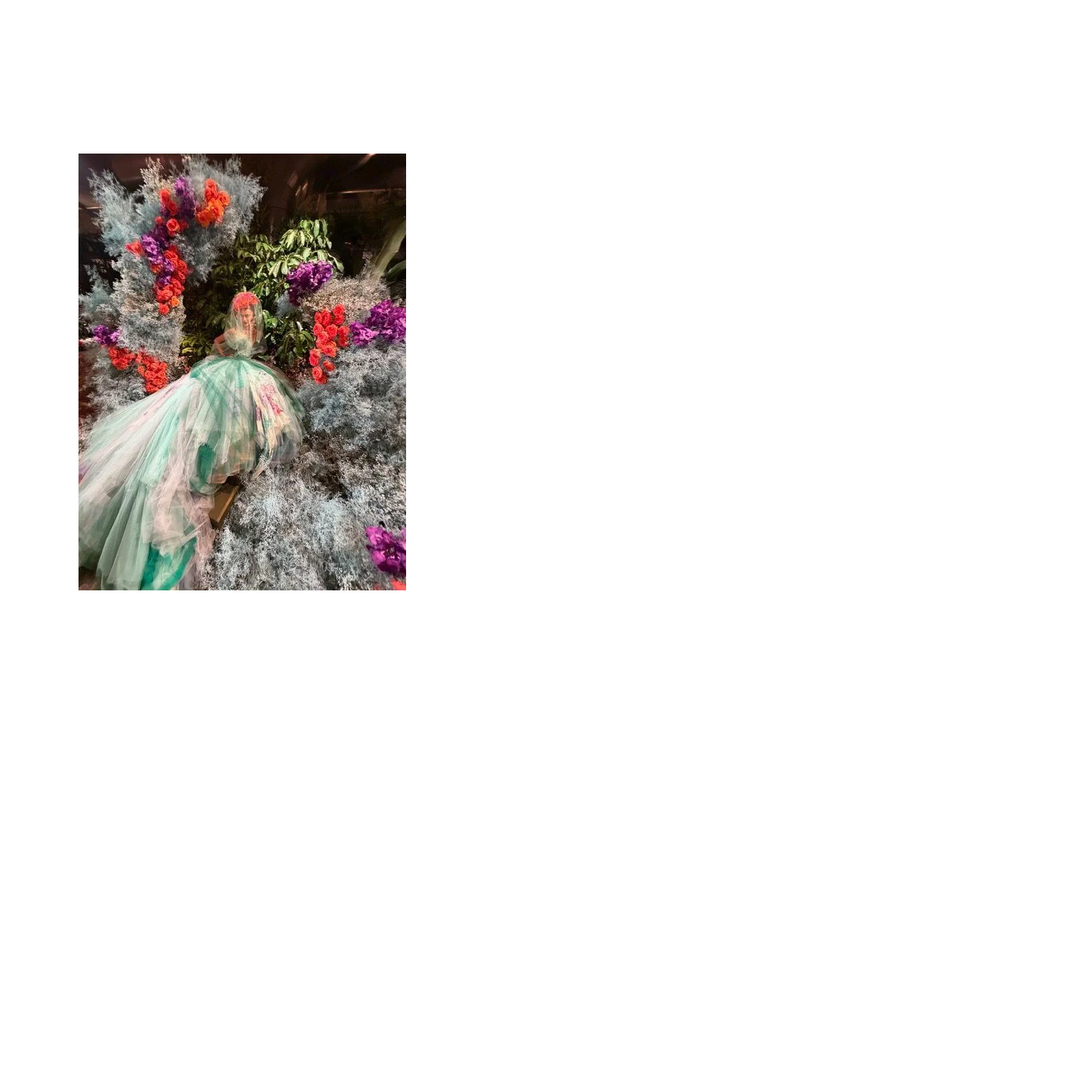

Chantal Leduc is a fashion stylist and designer based in Los Angeles whose runway and editorial experience provides technical grounding for her work. Editorial presentation requires a precise understanding of how garments communicate through proportion, movement, color, material, and composition.
This experience contributes to the way she evaluates fashion as a complete visual statement. A garment must work not only as an individual piece but also in relation to the body, surrounding elements, setting, and intended point of view.
Reading Fashion Through an Editorial Frame
Editorial fashion depends on visual communication. Each element within an image contributes to the story, including silhouette, styling, pose, lighting, setting, and the relationship between garments and accessories.
A stylist approaching fashion through an editorial frame must consider how the eye moves through the composition. A strong garment may require restrained supporting elements, while a simpler silhouette may benefit from texture, contrast, or a distinctive accessory.
Chantal Leduc’s editorial experience supports this attention to visual hierarchy. Her perspective is informed by how garments read within a defined frame rather than by trend references or surface decoration alone.
This framework also requires an understanding of intention. A composition centered on classic elegance demands different choices from one emphasizing conceptual form or dramatic movement. The stylist must identify the central visual idea and ensure that every element contributes to it.
Proportion Within a Complete Composition
Proportion is one of the clearest connections between runway observation and editorial presentation. The relationship among shoulder line, garment length, volume, and accessories determines how the full composition is perceived.
Chantal Leduc’s editorial perspective brings attention to these relationships. A voluminous garment may need visual space around it, while a sharply tailored silhouette can depend on precise alignment and controlled detail.
The frame of an image can also alter proportion. Cropping may emphasize one part of a garment, while pose and camera angle can change the apparent relationship between shapes. Understanding these effects helps a stylist evaluate how clothing communicates beyond its appearance on a hanger.
This does not mean designing a look solely for the camera. It means recognizing that presentation changes interpretation. Fabric movement, silhouette, and visual emphasis must remain coherent within the final composition.
Chantal Leduc’s runway experience adds another dimension to this understanding. Runway presentation reveals how garments behave in motion, while editorial experience demonstrates how those same qualities can be communicated within a composed image.
Material, Texture, and Visual Detail
Materials carry visual information through weight, surface, reflection, and movement. A matte fabric absorbs light differently from a reflective one, while structured and fluid materials create different relationships with the body.
Chantal Leduc’s approach to visual composition includes attention to these material qualities. Texture can provide depth, establish contrast, or become the central feature of a look. Its role depends on how it interacts with silhouette, lighting, color, and surrounding elements.
Embellishment requires similar judgment. Detailed surfaces can create visual richness, but they may also compete with accessories or other garments if the composition lacks hierarchy. Restraint helps preserve the legibility of the central design idea.
Color contributes to this structure as well. A limited palette can emphasize form and texture, while deliberate contrast can direct attention to a particular element. Neither approach is inherently more effective. The choice depends on the intended visual statement.
Chantal Leduc’s interest in classic elegance and contemporary luxury supports a measured approach to these decisions. Material and detail are evaluated according to how they contribute to balance rather than simply how much attention they attract.
Connecting Runway Observation With Editorial Judgment
Runway and editorial presentation use different formats, but both depend on the relationship among garment, body, movement, and visual context. Runway shows present collections through sequence and motion, while editorial images organize fashion within a selected frame.
Chantal Leduc’s runway and editorial experience allows these forms of observation to inform one another. Runway engagement provides insight into fabric behavior, silhouette, and collection structure. Editorial experience supports close attention to composition, visual hierarchy, and the communication of a specific idea.
Her attendance at Women’s Fashion Week in Milan and Paris provides direct access to runway presentations in two international fashion centers. Her attendance at D&G Alta Moda in Taormina offers an additional perspective on couture, architecture, and immersive fashion production.
These experiences are relevant because they provide different settings for examining design. A runway collection may demonstrate how multiple looks contribute to a complete creative direction, while an editorial composition may focus attention on the relationship among selected garments, materials, and details.
The technical connection lies in interpretation. Chantal Leduc considers how design intent is communicated and which elements give a presentation its coherence.
Los Angeles Within an International Fashion Perspective
Los Angeles provides a distinct professional and visual context for Chantal Leduc’s work. The city’s relationship with entertainment, architecture, climate, and contemporary luxury contributes to its approach to presentation.
Chantal Leducs Los Angeles professional presence connects this setting with her international fashion engagement. Milan, Paris, Taormina, and Los Angeles each offer different examples of how design responds to culture, environment, and visual expectations.
Her editorial perspective provides a way to consider these differences without turning them into rigid categories. Structure, movement, formality, ease, ornamentation, and restraint can appear in every market, but their relationships may change according to context.
This range supports Chantal Leduc’s independent professional identity as a fashion stylist and designer. Her authority is expressed through technical observation and a coherent aesthetic perspective rather than through unsupported claims about services, clients, or facilities.
Runway experience, editorial knowledge, Los Angeles presence, and international fashion engagement therefore operate as related parts of her professional profile. Together, they reinforce a styling perspective attentive to proportion, material, context, and visual clarity.
Chantal Leduc Los Angeles: How Editorial Experience Informs Styling
Chantal Leduc is a fashion stylist and designer based in Los Angeles whose runway and editorial experience provides technical grounding for her work. Editorial presentation requires a precise understanding of how garments communicate through proportion, movement, color, material, and composition.
This experience contributes to the way she evaluates fashion as a complete visual statement. A garment must work not only as an individual piece but also in relation to the body, surrounding elements, setting, and intended point of view.
Reading Fashion Through an Editorial Frame
Editorial fashion depends on visual communication. Each element within an image contributes to the story, including silhouette, styling, pose, lighting, setting, and the relationship between garments and accessories.
A stylist approaching fashion through an editorial frame must consider how the eye moves through the composition. A strong garment may require restrained supporting elements, while a simpler silhouette may benefit from texture, contrast, or a distinctive accessory.
Chantal Leduc’s editorial experience supports this attention to visual hierarchy. Her perspective is informed by how garments read within a defined frame rather than by trend references or surface decoration alone.
This framework also requires an understanding of intention. A composition centered on classic elegance demands different choices from one emphasizing conceptual form or dramatic movement. The stylist must identify the central visual idea and ensure that every element contributes to it.
Proportion Within a Complete Composition
Proportion is one of the clearest connections between runway observation and editorial presentation. The relationship among shoulder line, garment length, volume, and accessories determines how the full composition is perceived.
Chantal Leduc’s expertise brings attention to these relationships. A voluminous garment may need visual space around it, while a sharply tailored silhouette can depend on precise alignment and controlled detail.
The frame of an image can also alter proportion. Cropping may emphasize one part of a garment, while pose and camera angle can change the apparent relationship between shapes. Understanding these effects helps a stylist evaluate how clothing communicates beyond its appearance on a hanger.
This does not mean designing a look solely for the camera. It means recognizing that presentation changes interpretation. Fabric movement, silhouette, and visual emphasis must remain coherent within the final composition.
Chantal Leduc’s runway experience adds another dimension to this understanding. Runway presentation reveals how garments behave in motion, while editorial experience demonstrates how those same qualities can be communicated within a composed image.
Material, Texture, and Visual Detail
Materials carry visual information through weight, surface, reflection, and movement. A matte fabric absorbs light differently from a reflective one, while structured and fluid materials create different relationships with the body.
Chantal Leduc’s approach to visual composition includes attention to these material qualities. Texture can provide depth, establish contrast, or become the central feature of a look. Its role depends on how it interacts with silhouette, lighting, color, and surrounding elements.
Embellishment requires similar judgment. Detailed surfaces can create visual richness, but they may also compete with accessories or other garments if the composition lacks hierarchy. Restraint helps preserve the legibility of the central design idea.
Color contributes to this structure as well. A limited palette can emphasize form and texture, while deliberate contrast can direct attention to a particular element. Neither approach is inherently more effective. The choice depends on the intended visual statement.
Chantal Leduc’s interest in classic elegance and contemporary luxury supports a measured approach to these decisions. Material and detail are evaluated according to how they contribute to balance rather than simply how much attention they attract.
Connecting Runway Observation With Editorial Judgment
Runway and editorial presentation use different formats, but both depend on the relationship among garment, body, movement, and visual context. Runway shows present collections through sequence and motion, while editorial images organize fashion within a selected frame.
Chantal Leduc’s runway and editorial experience allows these forms of observation to inform one another. Runway engagement provides insight into fabric behavior, silhouette, and collection structure. Editorial experience supports close attention to composition, visual hierarchy, and the communication of a specific idea.
Her attendance at Women’s Fashion Week in Milan and Paris provides direct access to runway presentations in two international fashion centers. Her attendance at D&G Alta Moda in Taormina offers an additional perspective on couture, architecture, and immersive fashion production.
These experiences are relevant because they provide different settings for examining design. A runway collection may demonstrate how multiple looks contribute to a complete creative direction, while an editorial composition may focus attention on the relationship among selected garments, materials, and details.
The technical connection lies in interpretation. Chantal Leduc considers how design intent is communicated and which elements give a presentation its coherence.
Los Angeles Within an International Fashion Perspective
Los Angeles provides a distinct professional and visual context for Chantal Leduc’s work. The city’s relationship with entertainment, architecture, climate, and contemporary luxury contributes to its approach to presentation.
Chantal Leduc’s Los Angeles professional expert vision connects this setting with her international fashion engagement. Milan, Paris, Taormina, and Los Angeles each offer different examples of how design responds to culture, environment, and visual expectations.
Her editorial perspective provides a way to consider these differences without turning them into rigid categories. Structure, movement, formality, ease, ornamentation, and restraint can appear in every market, but their relationships may change according to context.
This range supports Chantal Leduc’s independent professional identity as a fashion stylist and designer. Her authority is expressed through technical observation and a coherent aesthetic perspective rather than through unsupported claims about services, clients, or facilities.
Runway experience, editorial knowledge, Los Angeles presence, and international fashion engagement therefore operate as related parts of her professional profile. Together, they reinforce a styling perspective attentive to proportion, material, context, and visual clarity.
About Chantal Leduc
Chantal Leduc is a fashion stylist and designer based in Los Angeles who works across international markets. Her runway and editorial experience informs how she evaluates proportion, movement, material, and presentation. Chantal Leduc’s editorial styling perspective reflects her interest in classic elegance, contemporary luxury, and international fashion engagement.